
Where it comes from
Himalayan Cashmere Sweaters, Made in Pokhara
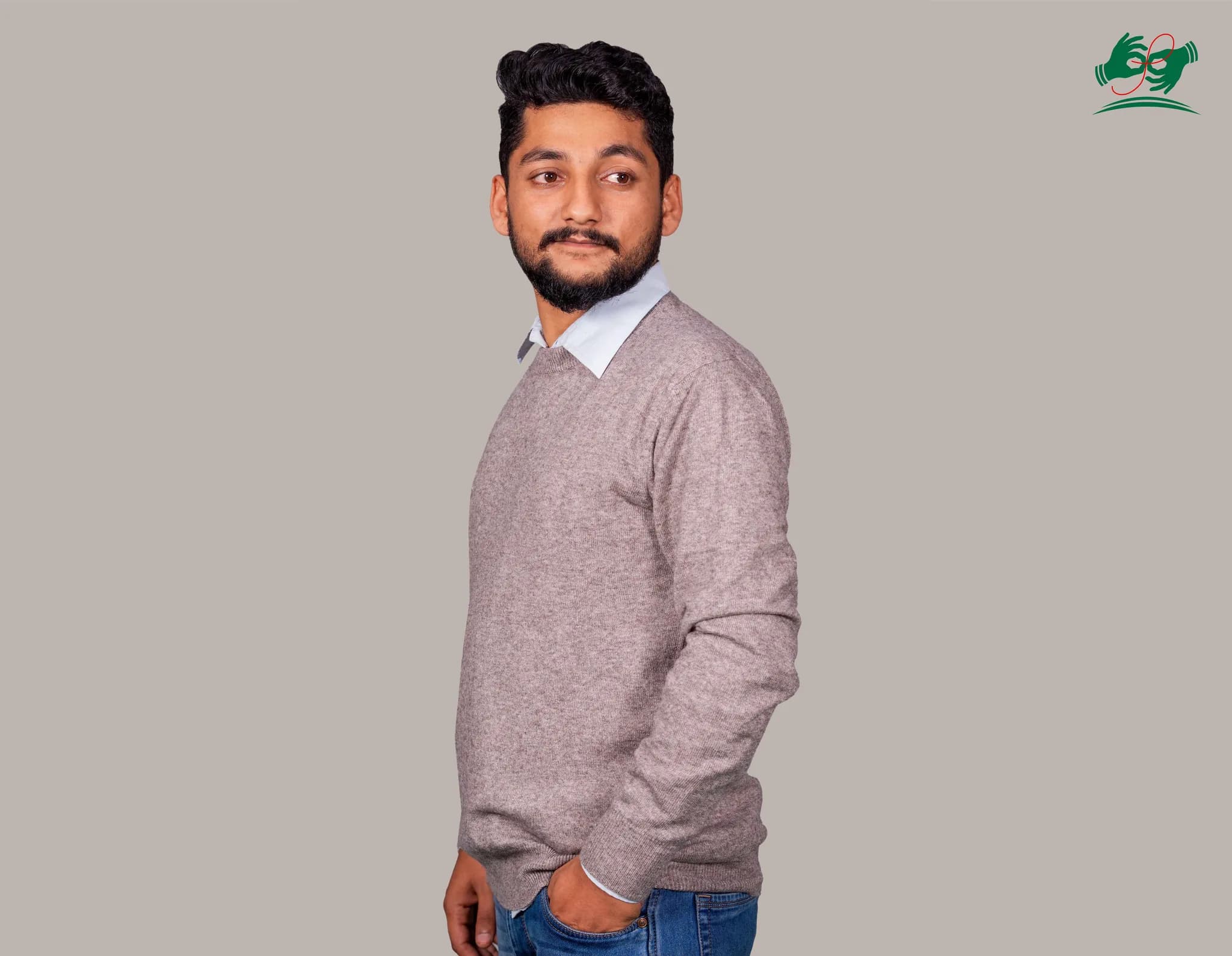
Himalayan cashmere, for us, means one thing. Chyangra fibre, the fine undercoat of Nepal’s cashmere goat, combed from herds above 3,000 metres in Mustang, Manang and Dolpo. It is Grade A at 12–16 micron, 100% cashmere, and knitted in our Pokhara workshop. Three men’s sweaters come from it: a crew neck and a V-neck at $155, and a quarter zip at $120.
What Himalayan cashmere actually means
Cashmere is not a fabric. It is the soft undercoat a goat grows to get through winter, hidden under a coarse outer coat. In spring the goat sheds it, and herders comb it out by hand rather than shearing.
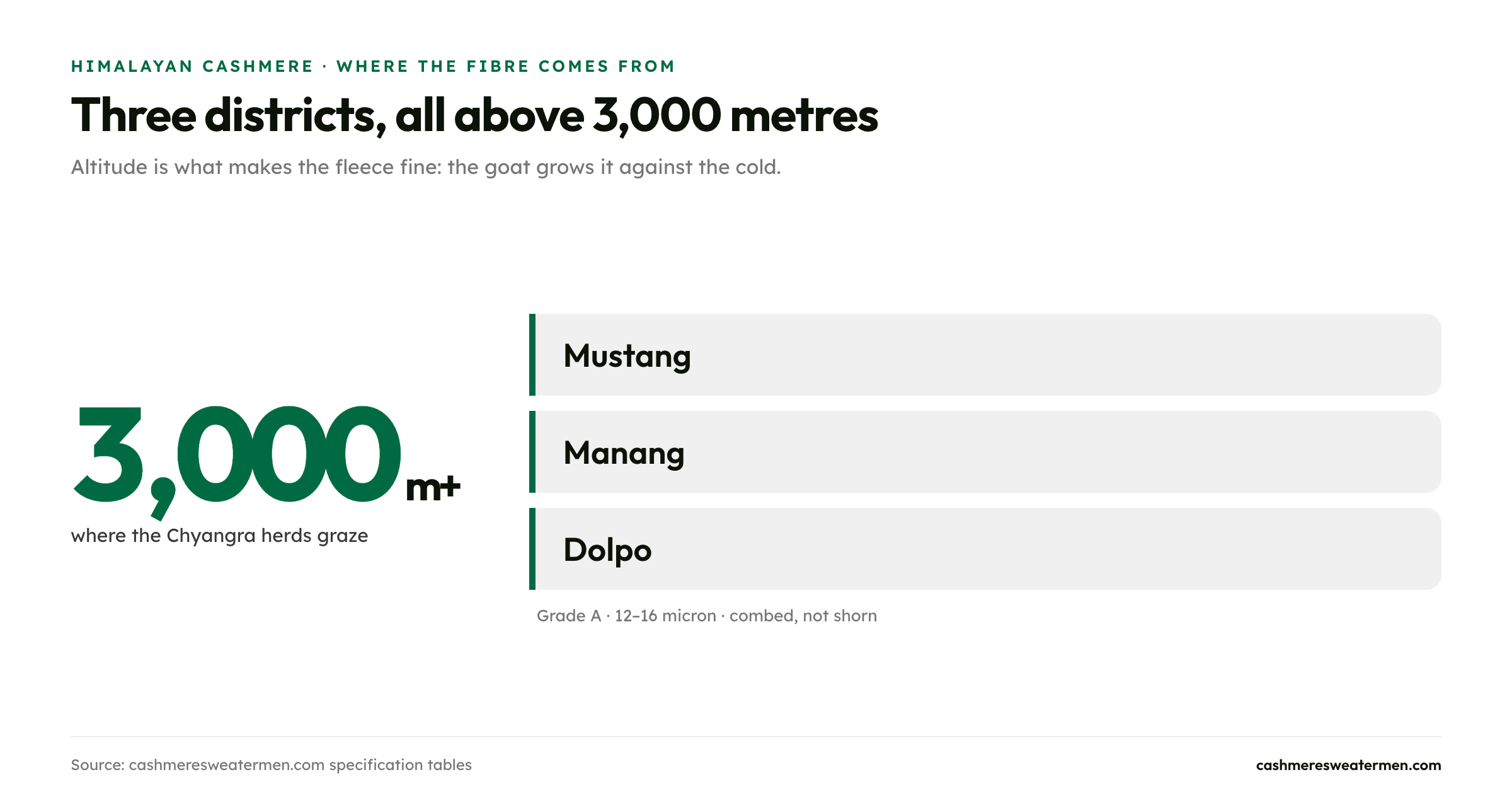
Cold makes it fine. The herds behind these sweaters live above 3,000 metres in Mustang, Manang and Dolpo, along Nepal’s northern border. Their fibre grades at 12–16 micron, which is Grade A.
 Open full size
- Altitude
- 3,000 m+
- Districts
- Mustang, Manang, Dolpo
- Fibre
- 12–16 micron, Grade A
That fineness is why a thin cashmere knit is warm without weight. For how far into the year that goes, read Can You Wear Cashmere in Summer?
The goat is the Chyangra, Nepal’s own cashmere goat. It is often confused with the Changthangi goat of Ladakh and Kashmir, but they are different animals.
Is the cashmere in Nepal real?
Yes. Nepal has its own cashmere goat and its own high-altitude herds. Combed Chyangra undercoat is real cashmere, no lesser than Mongolian or Chinese fibre.
The doubt comes from Kathmandu’s tourist streets, where plenty of viscose is sold as “pashmina”. That is a labelling problem, not a fibre problem. Here is what you can check:
- Ask for the district. “Nepal” is broad. Mustang, Manang and Dolpo are places you can trace.
- Ask for the micron and the grade together. One without the other is half an answer.
- Ask for the paperwork. Our fibre certification documentation is available on request. Contact us and we will send it.
- Burn a thread from a seam allowance on a sweater you already own. Real cashmere smells of burnt hair and crumbles to ash. Acrylic melts into a hard bead.
Checking a sweater you already own
How to Verify Your Cashmere Is Real walks you through it step by step. Yes Helping Hand also has a longer guide on how to check real cashmere.
Which country has the best cashmere?
No single country has the best cashmere. Fineness comes from cold winters and careful combing, sorting and dehairing, not from a border. The fine-fibre regions are the cold, high ones: Inner Mongolia, the Tibetan plateau, Iran and the Nepali Himalaya. Each produces fine fibre and ordinary fibre.
So ask about the lot, not the country. Ours is Nepali Chyangra at 12–16 micron. For a fuller comparison, read Yes Helping Hand’s guide to Mongolian cashmere versus Himalayan cashmere.
From the goat to the knitting floor
 Open full size
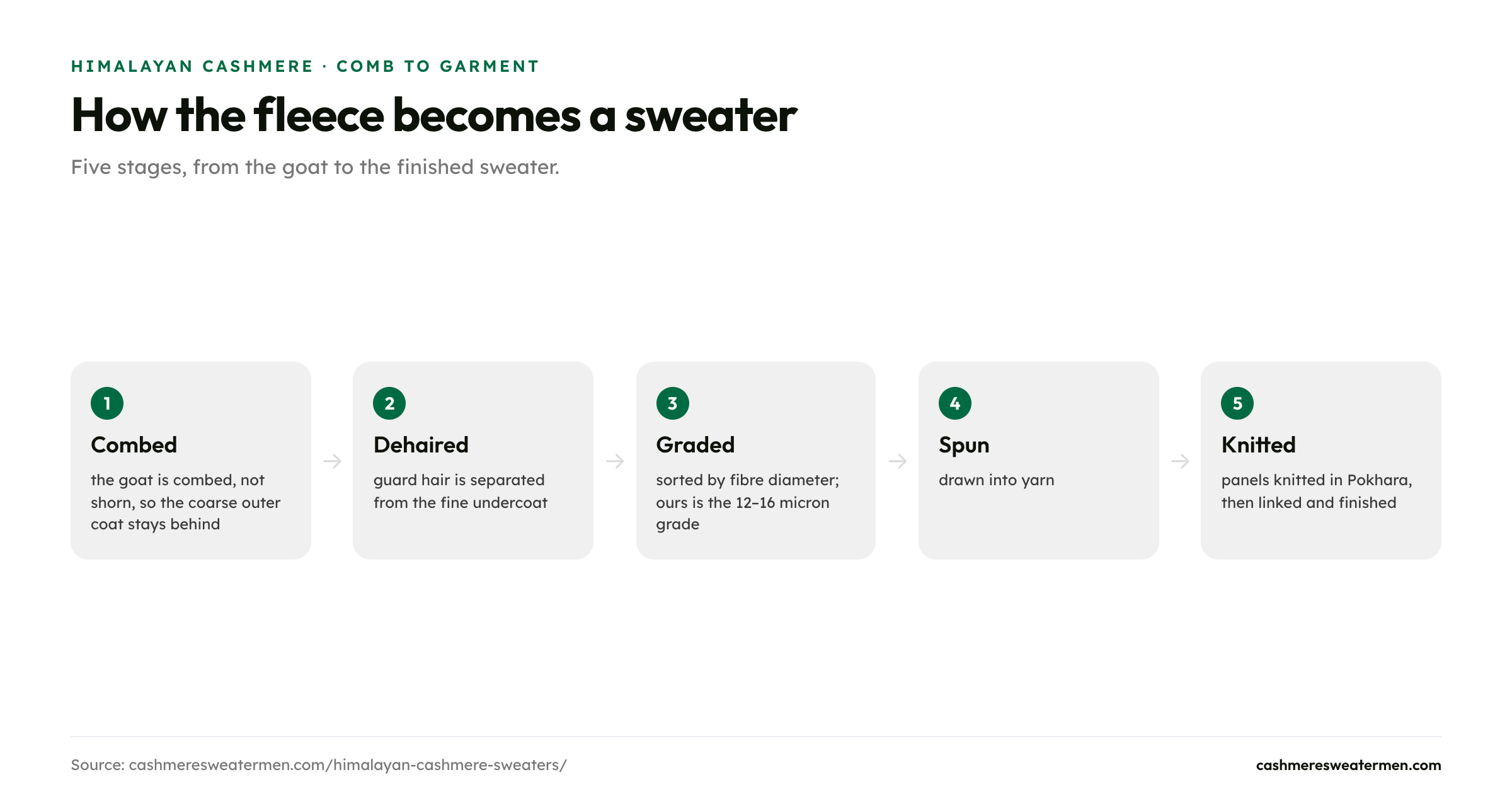
- Stages
- 5
- Graded at
- 12–16 micron
- Knitted in
- Pokhara
- Combed in spring by herders in Mustang, Manang and Dolpo as the goats moult. Combing, not shearing, so less coarse hair comes with it.
- Sorted and dehaired. The coarse outer hair comes out, and most of the raw weight goes with it.
- Graded at 12–16 micron.
- Spun into yarn.
- Knitted in Pokhara, then linked, washed, mended and pressed in our workshop.
The workshop in Pokhara
The fibre comes down from the mountains to Pokhara, at about 800 metres. There it is knitted in our workshop at Damside-17. Yes Helping Hand has run it as a social enterprise since 2011, working with more than 180 artisans, including single mothers and differently-abled artisans.
Your sweater is knitted by Hira Lal Tamang, linked by Rina Gurung, and washed and finished by Sanita Roka Chhetri. Renu Tamang then mends and checks it. She finishes about 22 pieces a month and is named on all three men’s sweaters. It is a small workshop, which is why the range is three sweaters. Meet the team on The Artisans Who Make Your Sweater.
The fibre at a glance
| Fibre | 100% cashmere |
|---|---|
| Grade | Grade A |
| Fibre diameter | 12–16 micron |
| Goat | Chyangra (Nepal’s cashmere goat) |
| Herding districts | Mustang, Manang & Dolpo · above 3,000 m |
| Made | Knitted in our Pokhara workshop, Damside-17 |
| Certification | Fibre documentation available on request |
The three sweaters
All three men’s sweaters are made from this fibre.
Grade A Chyangra, 12–16 micron, knitted in Pokhara.
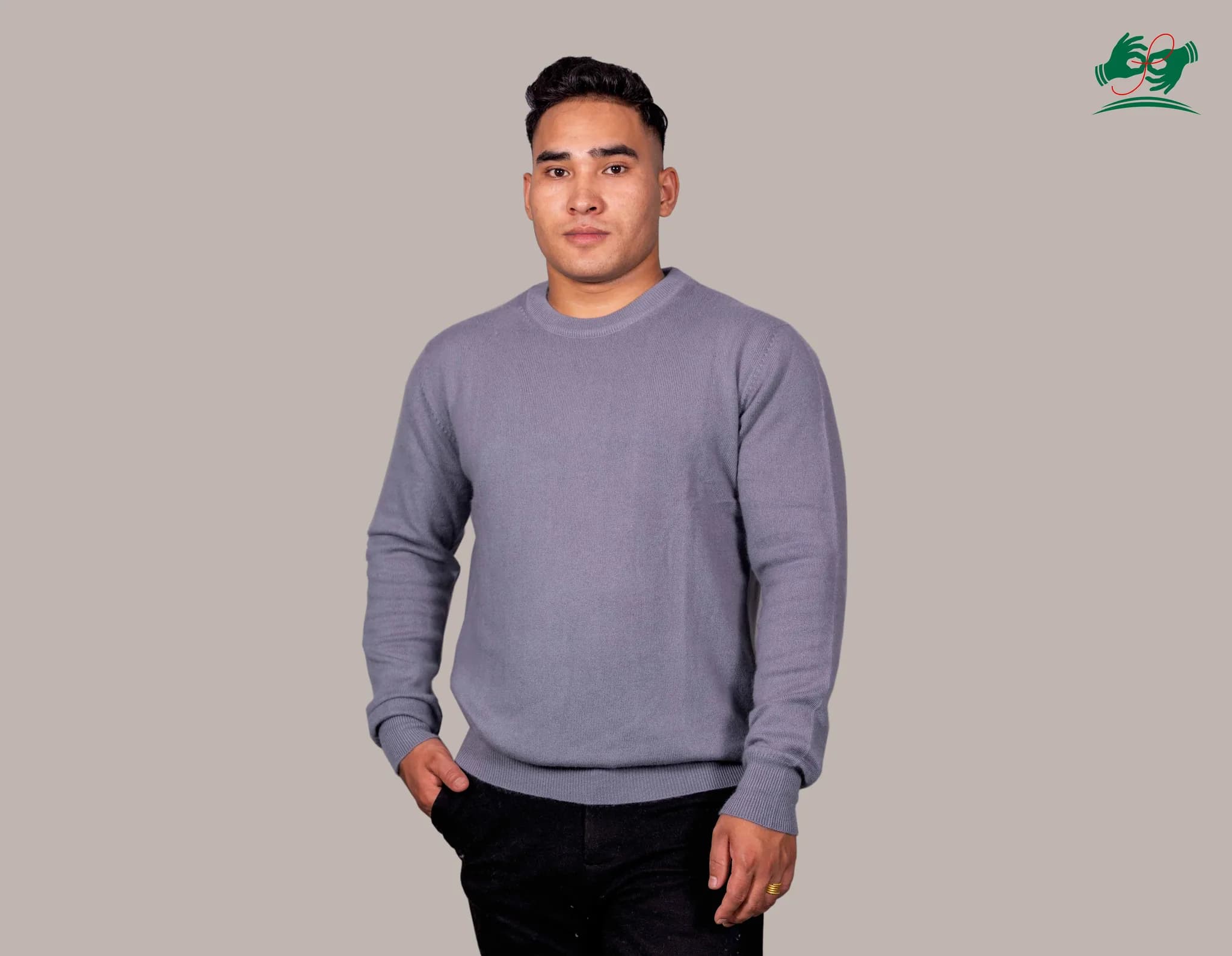

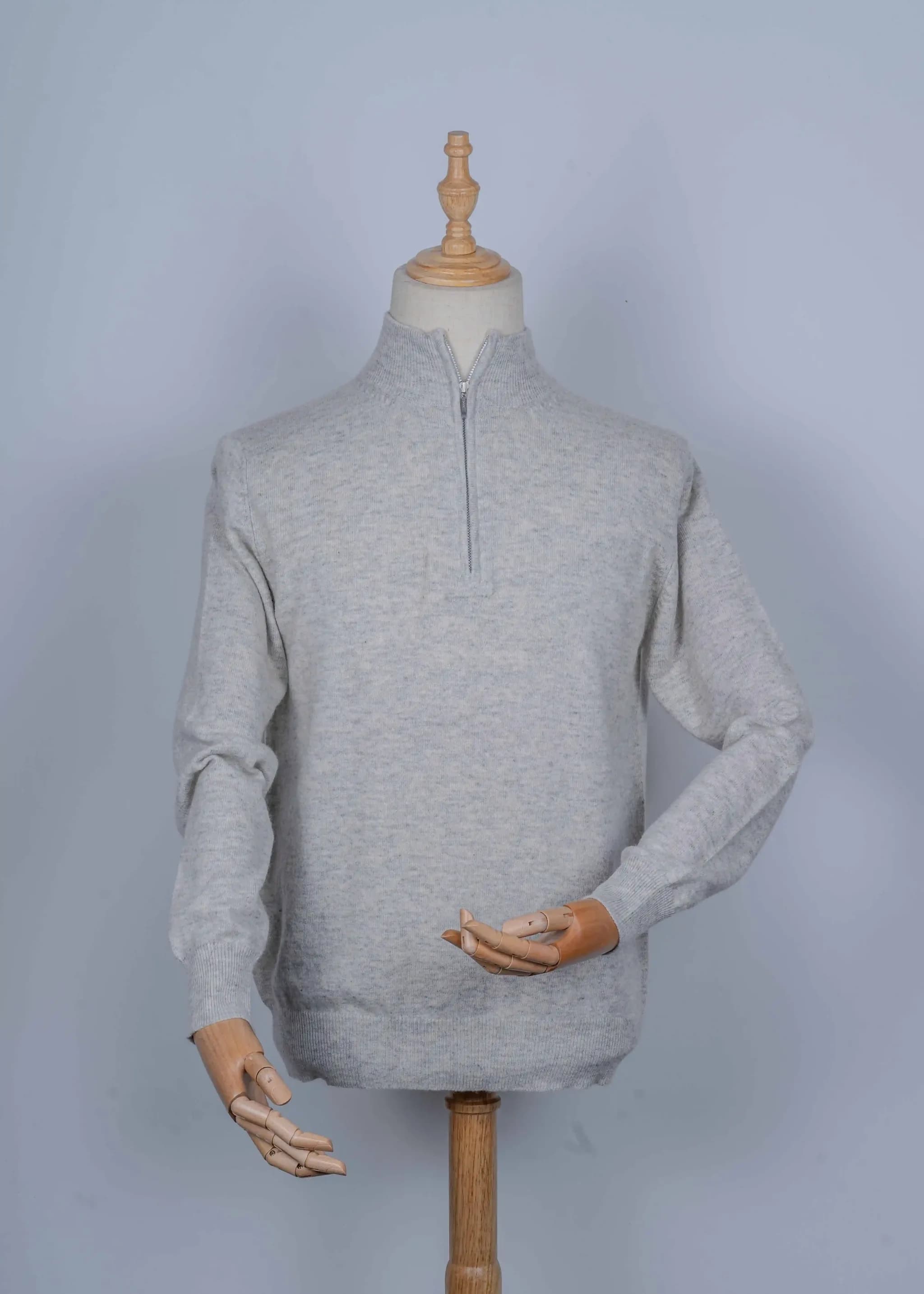
The Men's Crew Neck Cashmere Sweater comes in 14 colours, S–2XL, at $155. The Men's V-Neck Cashmere Sweater is the same body in 13 colours (Sand is crew only). The Men's Quarter Zip Cashmere Sweater is $120, one colour and one free size: 65 cm long, 50 cm across the chest, 60 cm sleeve. Tap through to choose a size and add it to your bag.
Good to know
It is a small range. No cardigans, turtlenecks or hoodies, just these three.
It ships from Nepal. Free worldwide on orders over $100. Allow 7–15 days after your order is confirmed, plus any customs time. Import duties, if your country charges them, are paid by you.
Every colourway is photographed on its own garment. Screens still vary a little from cloth.
The fibre is real, the grade is checkable, and the specification matters more than the mountain range. See the full range on Men's Cashmere Sweaters, or read Does Cashmere Pill? And What Stops It before you buy.
Common questions
Is the cashmere in Nepal real?
Yes. Nepal has its own cashmere goat, the Chyangra, herded high along the northern border, and its combed undercoat is genuine cashmere. Cheap “pashmina” in tourist shops is often viscose. That is a labelling problem, not a fibre problem. Ours is Grade A at 12–16 micron, and fibre certification documentation is available on request.
What is Chyangra cashmere?
Chyangra is Nepal’s cashmere goat, living high in the Himalaya. Cashmere is its fine undercoat, combed out in spring and separated from the coarse outer hair. It is a different animal from the Changthangi goat of Ladakh and Kashmir.
Is Himalayan cashmere the same as Nepali cashmere?
For these sweaters, yes. The fibre is Nepali and grows in the Himalaya. Elsewhere “Himalayan” can be looser, because the range crosses five countries, so ask for the district. Ours is Mustang, Manang and Dolpo.
Are these sweaters hand-knitted?
No. They are machine-knitted in our Pokhara workshop by Hira Lal Tamang, then linked, washed, mended and checked by our team. A sweater is knitted, not woven.
Who actually makes them?
Yes Helping Hand, a social enterprise at Damside-17, Pokhara, working with more than 180 artisans since 2011, including single mothers and differently-abled artisans. Renu Tamang, who mends and finishes about 22 pieces a month, is named on all three men’s sweaters.